Apply

Consultation

Get Approved
Shopping for a used car or truck in Atlantic Canada? This guide covers everything you need to know about buying pre-owned vehicles in Nova Scotia, New Brunswick, and throughout the Maritimes—from understanding certification programs to evaluating dealerships in Halifax, Moncton, and beyond. Whether you’re looking for quality used vehicles or exploring new and used options, we’ll help you find a dealership with an extensive selection and a guarantee of quality service.
The Atlantic Canada auto market offers diverse options for every budget and lifestyle, with both new and used vehicles available at reputable dealerships. Whether you’re shopping for new and pre-owned cars or focusing exclusively on pre-owned options, you’ll find a comprehensive inventory of pre-owned vehicles to choose from:
Compact sedans for fuel efficiency, mid-size vehicles for families, and luxury models at significant savings compared to new cars. Popular makes include Honda, Hyundai, Kia, and Nissan, offering reliability and lower maintenance costs.
Essential for Atlantic Canada’s weather and terrain, used trucks provide durability for work and recreation. Look for models with documented service history, especially if used for towing or commercial purposes.
From compact crossovers to full-size SUVs and versatile vans, consider cargo space, fuel economy, and whether you need all-wheel drive for Maritime winters.
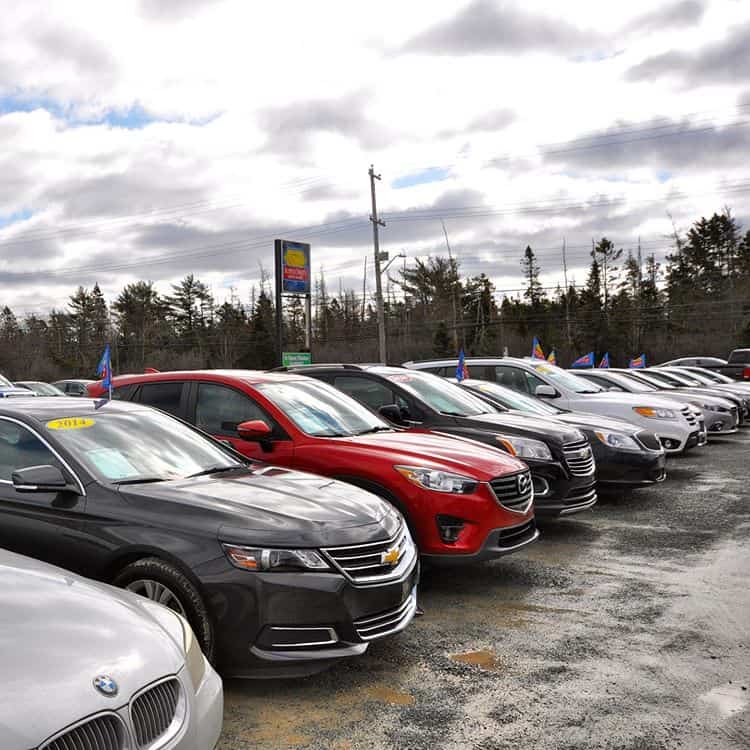
One of the most overlooked factors when shopping for used vehicles is how long a dealership has been in business. Established auto dealers with years of operation in Atlantic Canada offer significant advantages over newer or fly-by-night operations:
Dealerships with proven track records have established relationships with multiple lenders, giving you access to better financing options and rates. However, some rare dealerships go even further by offering true in-house financing: where they lend their own money directly to customers.
True in-house financing programs are uncommon because they require significant financial stability and a long-term commitment to customer relationships. These programs serve customers who face challenges with traditional bank lending, including those rebuilding credit, dealing with past financial difficulties, or self-employed individuals with non-traditional income verification.
When a dealership is willing to lend its own capital, it demonstrates both financial strength and confidence in the quality of vehicles they sell. For example, Super Dave’s Auto Sales offers this type of genuine in-house financing program, allowing them to approve customers when traditional banks say no; a capability that requires years of established operations and financial credibility.
When evaluating dealerships, ask specifically whether they offer true in-house financing (where the dealership is the lender) or simply facilitate third-party loans. Newer used car lots typically lack both the lender relationships and the capital reserves to offer either option, severely limiting your financing choices.
The auto financing landscape has changed dramatically in recent years. Many larger lenders and banks have pulled back from auto financing, particularly for used vehicles, making it significantly harder for dealerships to secure approvals for customers they could have easily helped before 2020.
Banks are currently reviewing their portfolios of Atlantic Canada used car dealerships and cutting ties with those showing high default rates. This consolidation means fewer financing options for consumers and tighter approval criteria across the board. When evaluating a dealership, ask directly:
A dealership that’s evasive about their lending partners could indicate problematic financing practices. Some dealerships resort to misrepresenting clients’ financial situations to banks to secure approvals; a practice called “credit packing” or “income inflation.” While this might get you into a vehicle short-term, it leaves you locked into payments you can’t afford and potentially facing repossession down the line.
Established dealerships with strong, long-term lender relationships and transparent in-house programs demonstrate they’ve maintained ethical practices and low default rates which ultimately protects you as the buyer.
A dealership that’s been serving Atlantic Canada, be it Halifax, Moncton, Lower Sackville or beyond for years has a reputation to protect. They’re more likely to honour warranties, handle issues professionally, and provide ongoing customer service. Newer operations may disappear when warranty claims arise.
Established dealers have refined their inspection processes and reconditioning standards over time. They know which vehicles hold up in Maritime conditions and which to avoid. This experience protects you from costly mistakes.
If a deal seems too good to be true, investigate why. New or struggling dealerships sometimes offer attractive prices by skipping essential reconditioning work, using substandard parts for repairs, or rushing through safety inspections. These shortcuts won’t become apparent until after purchase; often after the minimal warranty period expires leaving you with expensive repairs and major safety concerns.
When evaluating dealerships, ask how long they’ve been in business, check their online reviews over multiple years, and verify they have an established service department for warranty work and maintenance.
Beyond longevity, reputable auto dealers distinguish themselves through:
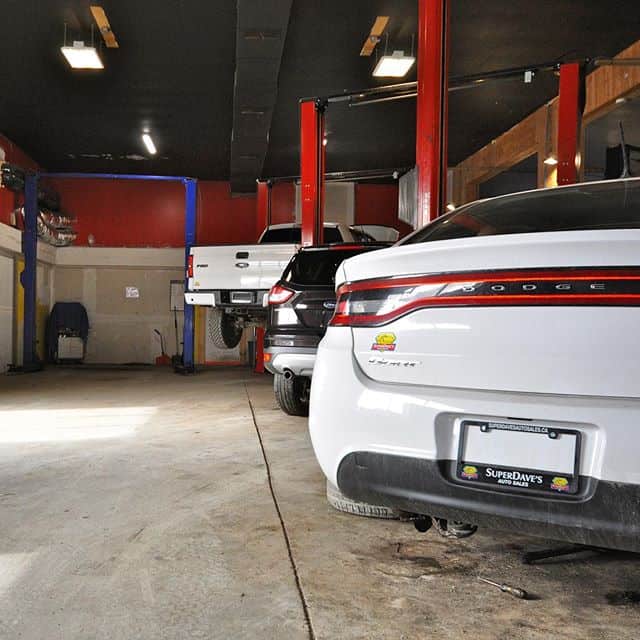
Quality dealers conduct thorough multi-point inspections and willingly share results. For example, Super Dave’s Auto Sales in Dartmouth uses a 116-point Super Certified inspection and only sells 7 out of 10 vehicles they purchase—the rest go to auction for not meeting standards.
Before sale, vehicles should receive fresh oil changes, safety inspections, professional detailing, and any necessary repairs. A new Nova Scotia MVI (Motor Vehicle Inspection) sticker within 30 days of purchase is standard practice.
Look for dealerships offering at least a 2-month comprehensive warranty on pre-owned vehicles, with extended warranty options available. In-house financing customers often receive enhanced warranty terms.
Carfax or similar reports should be provided automatically, showing accident history, previous ownership, and service records.
When shopping for used cars in Atlantic Canada, note that most independent used car lots don’t offer leasing—they focus on sales with financing options. Financing lets you make payments toward ownership and build equity, while leasing (typically only available through new car dealerships) keeps you in a perpetual payment cycle without ownership.
Consider your budget, expected annual mileage, and how long you plan to keep the vehicle when choosing financing options. Use a car loan calculator to understand your potential payments. Auto groups typically work with multiple lenders to offer competitive rates, even for customers with challenged credit.
Certifying a pre-owned vehicle involves detailed inspections to meet specific quality standards. Reputable dealerships conduct multi-point inspections covering:
Quality certification programs include comprehensive reconditioning at licensed garages, warranty coverage, and vehicle history verification. Always request the complete inspection report before purchase.
Help others make informed used car buying decisions
✓ Code copied to clipboard!
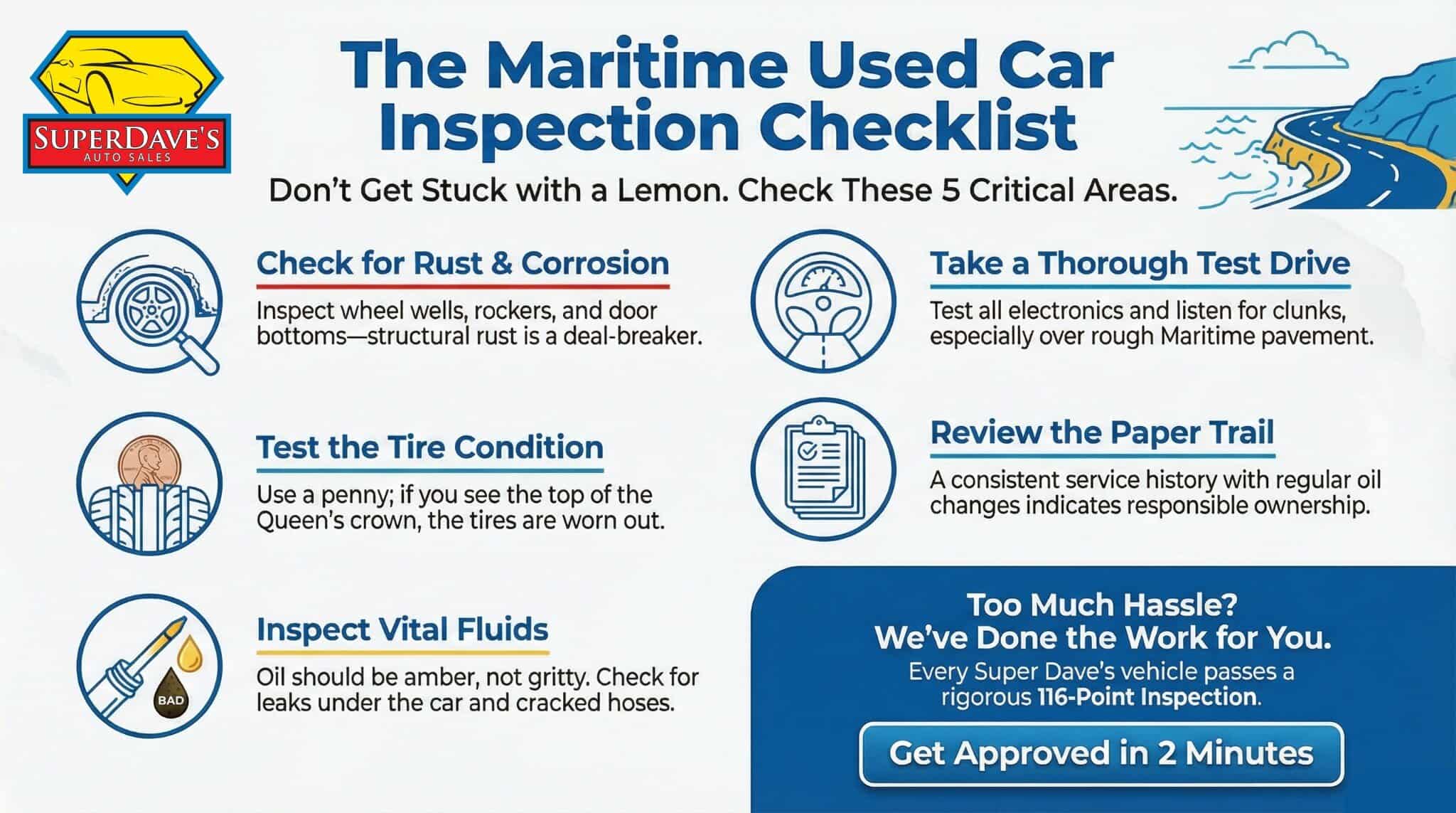
Before buying any used vehicle, personally check these critical areas:
In Atlantic Canada’s salt-heavy climate, inspect wheel wells, door bottoms, rocker panels, and the undercarriage carefully. Surface rust may be cosmetic, but structural rust is a deal-breaker.
Use the penny test (insert a penny into tread grooves—if you see the top of the Queen’s crown, tires need replacement). Check for uneven wear patterns indicating alignment or suspension issues.
Oil should be amber, not black or gritty. Coolant should be bright and clean, not rusty. Check for leaks under the vehicle and inspect belts and hoses for cracks.
Listen for unusual noises from the engine, transmission, or suspension. Test all electronics (windows, locks, climate control, infotainment). Ensure smooth braking without pulling and smooth shifting without hesitation. On Maritime roads, verify the vehicle handles bumps and rough pavement confidently.
Request maintenance records showing regular oil changes and major repairs. A well-documented service history from the same technician or garage indicates responsible ownership.
Browse inventory online to research options before visiting dealerships. Filter by make, model, price range, mileage, and body type to find vehicles matching your needs. Our online inventory makes it easy to explore whether you’re looking for new or used vehicles. Many Atlantic Canada dealerships now offer:
When you shop online, save time by narrowing choices before in-person visits, but always test drive and inspect vehicles yourself before purchase.

After-sale support differentiates great dealerships from average ones. Look for dealers offering:
Whether you’re in Lower Sackville, Halifax, Moncton, or anywhere in New Brunswick, Nova Scotia, PEI, or Newfoundland, establish a relationship with a dealer who provides competitive ongoing support—not just a one-time sale.
Reading customer reviews provides insights into the actual car-buying experience. Look for feedback about:
Positive reviews consistently mention transparency, fair deal pricing, and excellent customer service—all indicators of a reputable auto dealer worth your business.
Choosing a quality used vehicle over a new vehicle offers several advantages:
Pre-owned cars and trucks cost significantly less than new and used vehicles, letting you afford better-equipped models or higher-end brands within your budget.
New vehicles lose 20-30% of value in the first year. Used vehicles have already taken this hit, preserving more of your investment. This is also why trading in your vehicle can be a smart financial move—you’re leveraging remaining value rather than absorbing the steepest depreciation.
Insurance rates for used vehicles are typically 15-30% lower than for new cars. Registration fees in Atlantic Canada also decrease as vehicles age.
Research reliability ratings and common issues for specific model years before purchase. Many modern vehicles remain reliable well past 100,000 km with proper maintenance.
Throughout this guide, we’ve outlined what separates quality used car dealerships from the rest: years of established operations, transparent inspection processes, comprehensive reconditioning, genuine in-house financing, and ongoing customer support. These aren’t just ideals—they’re the standards customers should expect when making such an important purchase.
At Super Dave’s Auto Sales, we’re confident sharing this advice because these practices define how we’ve operated in Dartmouth for years. Our Super Certified Program with its 116-point inspection reflects our commitment to quality (rejecting 3 out of 10 vehicles we could sell). Our true in-house financing program—where we lend our own money—demonstrates both our financial stability and our willingness to serve customers when traditional banks won’t. Our longevity in the Atlantic Canada market has given us the lender relationships, reconditioning expertise, and reputation that only comes with time.
We’ve built our name by ensuring every customer receives transparent service, thoroughly reconditioned vehicles, and ongoing support long after the sale. Whether you’re shopping for new and used cars or certified pre-owned vehicles, browse our inventory today to find great deals and experience the difference that comes from a dealership that doesn’t just meet these standards—we helped set them. Ready to get started? Apply for financing to see what you qualify for.